
Crofton Previous Residents by Era
A single record rarely tells the whole story. One Crofton house can pass through many hands across eras. The Maryland assessment record anchors the current parcel. The Anne Arundel deed index then follows each title transfer. Census schedules, printed directories, newspapers, probate files, and permits fill different parts of the trail. Crofton has no city records counter of its own. Custody runs through Anne Arundel County, the Maryland State Archives, and local research libraries. Pick a source that fits the date. Then save the address, account, legal description, and citation together.
| Source | Years It Covers | Where Held | What It Shows |
|---|---|---|---|
| SDAT current parcel card | Current account | Maryland SDAT | Owner line, mailing and premise addresses, legal description, values, and sale reference. |
| Anne Arundel electronic land index | Begins July 1, 1967; live end date changes | MDLandRec | Modern grantor, grantee, instrument, book/page, and deed-chain clues. |
| Historical land indexes | Series from 1653 through 1985 | Maryland State Archives guides and microfilm | Older title links, tract names, lot references, and party indexes. |
| Annapolis and county directory holdings | Located runs from 1887 through 1972 | State Archives and library collections | Coverage-dependent subscriber and household context, not a Crofton roster. |
| Federal census and library databases | Individual schedules under the 72-year rule | AACPL and census resources | Older household, age, and neighborhood context. |
| Land Use Navigator | Current records; start year not published | Anne Arundel Inspections and Permits | Construction, alteration, inspection, and record-reference clues. |
The table is a sequence. No source guarantees an occupant's name. The parcel card and deed come first, fixing the land's identity before anything else. A directory should be trusted for a Crofton house only after its geography and date are confirmed. The Maryland State Archives directory holdings cover Annapolis and county material. No dedicated Crofton printed or reverse directory exists. Treat the Maryland State Archives directory guide as a coverage check. Do this before citing a nearby volume.
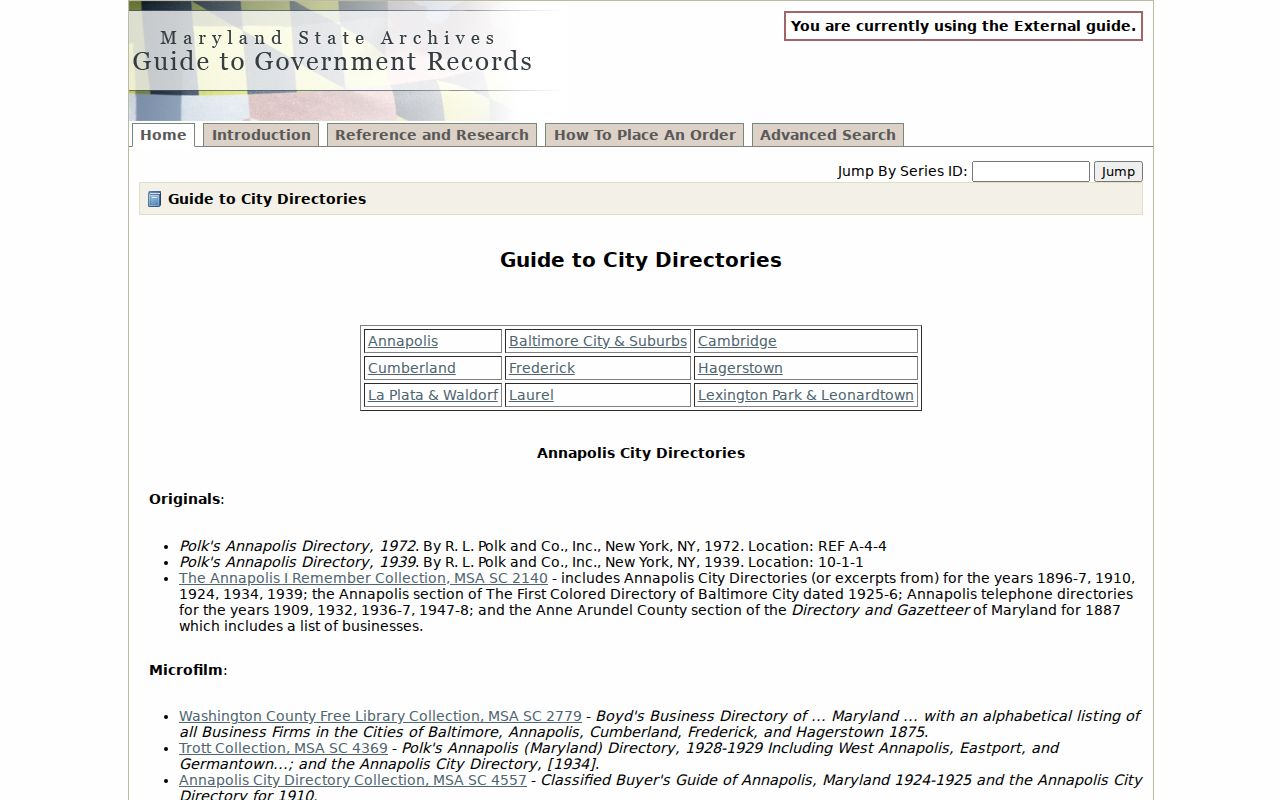
The guide separates a true Annapolis directory run from a collection that genuinely reaches a Crofton address.
Start a Crofton Address History
Begin at the SDAT Real Property Search. Select Anne Arundel County. From there, search by street address, street name, account identifier, or map reference. Owner-name, neighborhood, subdivision, town, and ZIP searches are not supported. The result card separates two addresses. The premise is the parcel's physical location, while the owner mailing address may sit at a post-office box or in another city. A legal description, sale date, consideration, improved status, and owner-occupancy or tax-credit fields may also appear. These are parcel facts, not a household roster.
Copy three fields before leaving. Take the premise address, account identifier, and legal description. A modern street number works for current searches. Older deeds, however, may cite a lot, subdivision, tract, or metes-and-bounds description, and the legal description is the bridge across that gap. Keep the owner mailing line separate, since a post-office box or another city proves nothing about residence.
Note: SDAT is informational property data, so confirm title details against the recorded deed rather than the parcel card.
Crofton Deeds Before 1967
Maryland Land Records requires a free Maryland State Archives account. Its Anne Arundel snapshot begins July 1, 1967. The displayed end date is live data, so check it during each search. A miss outside that span means nothing yet. The Circuit Court counter, clerk copies, older book references, microfilm, and Archives indexes carry the search further back.
Anne Arundel grantor and grantee series at the Archives run from 1839 to 1977 or 1985. Earlier indexes reach back to 1653. Corporation series and tract index S1444 span 1653 to 1784. These are historical bridges, not a current-address lookup. A modern house number may stop matching. Then search the deed's lot or tract terms instead. The Anne Arundel Circuit Court Land Records Department handles records and copies the online account lacks.
The MDLandRec grantor and grantee help shows both party-search and book/page routes. Each stop reveals the prior citation.
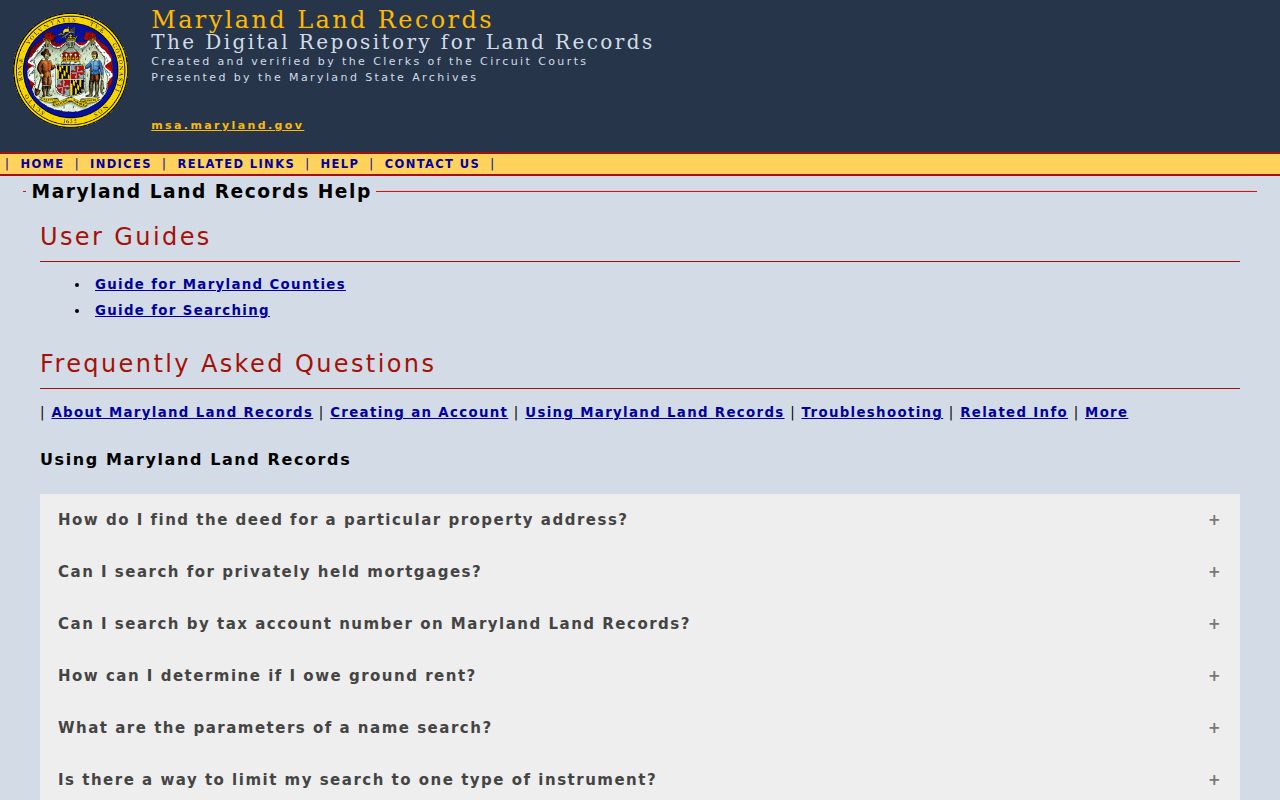
Note the party role at every stop. Recording the prior citation keeps a date gap from breaking the title chain.
Trace Crofton Previous Residents
A deed chain tracks owners, not every household. Start from the current SDAT card's deed reference. In MDLandRec, pick Anne Arundel, jump by book and page when known, or search the party name with the right party type and instrument category. Write down each grantor, grantee, recording date, book and page or document number, consideration, and legal description. Note remarks and cross-references too.
- Pull the current parcel's premise address, account, legal description, and latest sale reference from SDAT.
- Find that transfer in MDLandRec by book/page or party name, then read the deed image or record citation.
- Identify the seller, who is the grantor on the later deed, and search that seller as a grantee to locate the earlier purchase.
- Repeat the buyer-to-seller sequence, comparing each legal description and plat reference with the prior deed.
- When the electronic index ends, move to the Circuit Court counter or the Archives historical series and microfilm rather than stopping at the screen.
- Grantor
- The party transferring an interest in the recorded instrument, commonly the seller in a deed.
- Grantee
- The party receiving that interest. In the next older purchase, a later seller may appear as the earlier grantee.
- Chain of title
- The documented sequence of transfers for the same land, linked by parties, dates, citations, and land descriptions.
- Legal description
- The lot, tract, subdivision, or metes-and-bounds identity in a deed. It is more durable than a street number when older records use a different address form.
Crofton Legal Description Bridge
Old deeds often skip the name Crofton entirely. The ground was Anne Arundel County land first, recorded centuries before the planned community existed. A deed from the 1700s may cite a patent, tract, plantation, or lot name instead of a street. Match the legal description and plat citations rather than forcing a historical record into a modern street-number search. The Maryland State Archives tract index earns its keep once a title chain reaches that older record environment.
Historic-property questions open another door. The county historic inventory route and MHT Medusa add architectural context, National Register status, eligibility determinations, and easement details for a resource. Architectural material is public through the map. Archaeological site locations stay restricted. That boundary protects fragile places and deserves respect. A historic-resource record explains the property, not its former households.
Crofton Previous Residents After 1964
Crofton began as a planned community in 1964, per the county's Region 5 planning material. That year is a practical checkpoint. A house developed in the 1960s or 1970s often leaves a familiar subdivision and street trail. Before that, the same land leads to older tract names and county-level records. This is a records-geography shift, not proof that a pre-1964 resident belonged to a modern Crofton neighborhood. Crofton's name itself came late.
The Anne Arundel Region 5 Plan also names Crofton Village, Walden, Chapman Farms, Crofton Meadows, and Village Green, plus corridor geography. The plan names places, not owners. Treat a community label as a secondary finding aid. Then verify the parcel and land description itself. The Crofton Civic Association street list can help retain a Crofton Parkway number range. Still, it is civic geography, not title evidence.
Crofton Past Household Clues
Owners are only part of a house history. A directory entry, telephone listing, census schedule, obituary, or probate file can place a person or household near an address at a particular time. No Crofton-specific directory or telephone series exists. The printed runs that survive are mostly Annapolis or county material. Check the stated geographic scope before using an entry for a Crofton address. A subscriber or principal householder is never automatically everyone in the home.
- Match the address date to a directory or telephone volume whose coverage is known, and retain the source title with the result.
- Search surname variants, initials, spouse names, abbreviated street forms, and nearby neighborhood terms when the volume's coverage supports it.
- Pair an older directory year with the released federal census period, using neighborhood and county clues to test the household match.
- Read the original directory image when OCR changes a name or street number, then record the page citation.
The collections behind these clues are described in the Crofton city directory resource. AACPL's in-library genealogy services offer a practical shelf. HeritageQuest covers the 1790 to 1930 census there. That shelf matters when an online search hits a coverage boundary.
Crofton Previous Residents in Directories
The Maryland State Archives holds useful Anne Arundel material. Its runs include an 1887 business and gazetteer context, Annapolis directories from 1896–97, 1910, 1924, 1934, 1939, and 1972, plus telephone directories for several years. These titles support a carefully scoped search. None is a citywide Crofton directory. None should be presented as one. The Archives warns that OCR on digitized directory pages can produce numerical errors. Read the page image itself before treating a number as an address match.
A disappearance from a directory can mean many things. A move, an unlisted phone, a coverage change, a missed OCR result, or a changed household label all look identical in print. Compare it with a deed date. A census schedule, obituary, or public notice can add confirmation. A no-result may simply be a coverage gap. Crofton's planned-community development came far later than the oldest county records, so its name appears in few of them.
Crofton Permits and Probate Clues
Land Use Navigator searches existing permit, licensing, planning, complaint, and inspection records by address, parcel, or Tax Account ID. It periodically draws address and parcel references from SDAT and county GIS. A permit can date construction or alterations. It may name an applicant, owner, or contractor. It is not a household roster. Search the target address first. Then compare the parcel identifier with SDAT before assigning a record to the lot.
A deed that names an estate points to the Anne Arundel Register of Wills. The county publishes no official public estate-name interface. Call ahead for the decedent-name or estate-number route. Ask for current copy instructions too. AACPL's Local History Collection, Kuethe Library, and newspaper resources add obituary, church, Bible, map, photograph, and local-publication clues once the land trail ends. AACPL lists The Capital from 1991 forward. Its historical Newspaper Archive run includes The Capital through 2024. Confirm access conditions before relying on either.
The Joan Cass Beck Collection offers appointment-based access to maps, preservation files, town-planning material, genealogy, and county historic-site resources. Those pieces can clarify a Crofton house history.
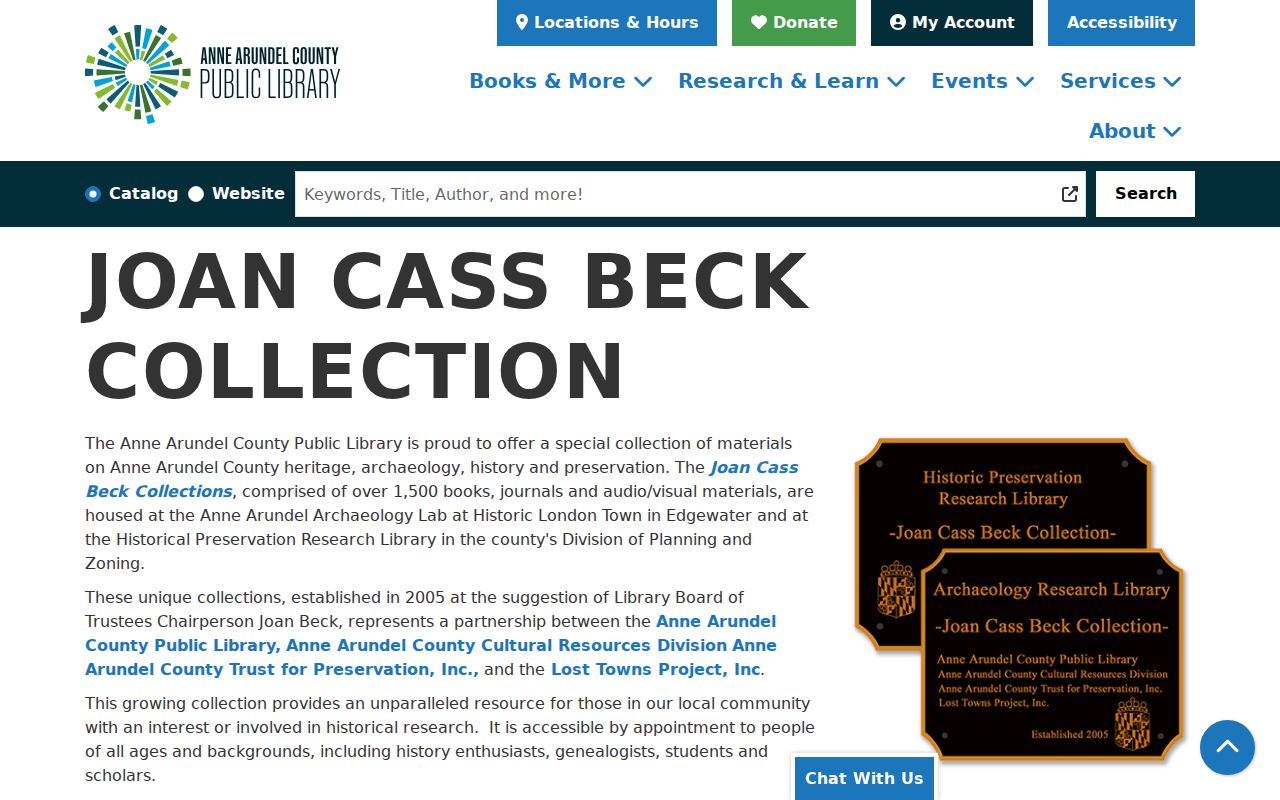
The collection's maps and local-history materials provide a documented fallback. Use them when a portal shows no image or a present-day address stops carrying the search farther back.
Crofton Previous Residents, Lawfully
Use a former-resident trail for house history, family history, estate work, or personal research. Verify each result with the holding office. An owner line, a subscriber entry, or a mailing address never describes every person at a home. Maryland's Safe at Home program can shield an eligible participant's address in real-property transactions. Voter confidentiality can withhold an actual address too. Both protections deserve respect.
Lawful use. Crofton previous-resident research supports house and family history, not surveillance. Never use a record trail to follow, harass, intimidate, or harm a living person.